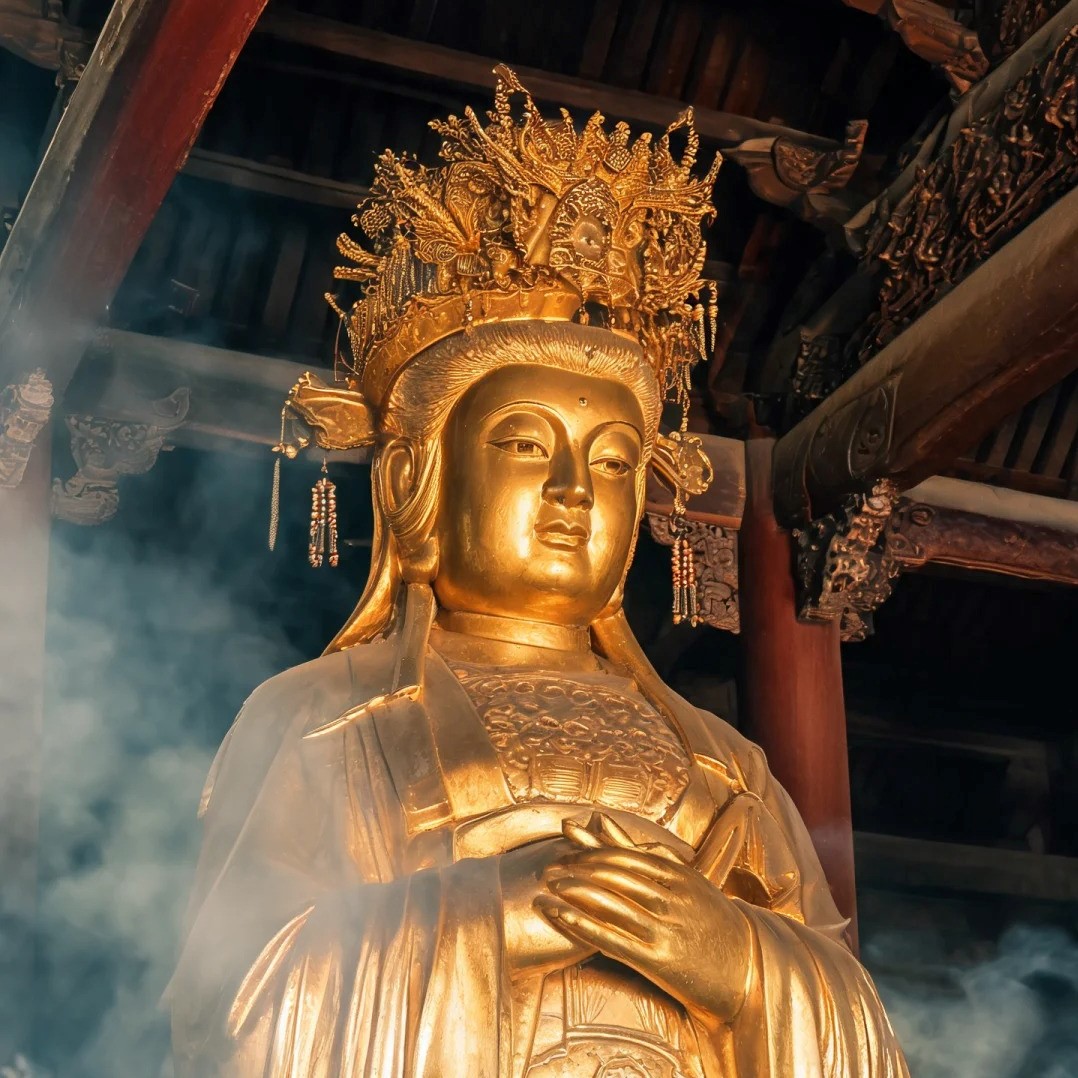
Jiangsu - Nanjing Mazu Temple
Nanjing Mazu Temple, also known as Tianfei Palace, sits along the Yangtze River in Xiaguan District of Nanjing. First built in 1407 during the early Ming Dynasty by imperial order, it was constructed to honor Mazu, the Chinese sea goddess, and to commemorate the successful voyages of Zheng He. As one of the largest Mazu temples in southern China, it features grand traditional halls, stone steles and ancient ginkgo trees, and stands as a key historical site of China’s maritime trade and the Ming Dynasty’s ocean expeditions. It has a subtropical monsoon climate, with mild springs and autumns being the best visiting seasons. Time zone: UTC+8, no daylight saving time.
Top highlights
- One of the largest and most historically important Mazu temples in southern China, built by imperial order in the early Ming Dynasty
- Closely linked to Zheng He’s voyages to the Western Seas, serving as a ritual site for praying for safe maritime journeys
- Well-preserved Ming and Qing style architecture, including the main hall, opera stage and historic stone steles
- Ancient ginkgo trees that turn brilliant gold in late autumn, a popular seasonal photography spot
Local culture
Mazu belief is an important part of Chinese maritime folk culture, and this temple has been the center of Mazu worship in Nanjing for over 600 years. Local fishermen and merchants still come to pray for safety and good fortune. The annual Mazu birthday festival features traditional opera performances and folk rituals, carrying forward the ancient maritime customs of the Yangtze River delta.
Food
Nearby streets serve classic Nanjing snacks: salted duck, duck blood vermicelli soup, pan-fried beef buns, osmanthus cakes and rice wine. The old streets around the temple also sell traditional pastries and preserved fruits.
Practical tips for visitors
- It is located in downtown Nanjing, easily reachable by bus and metro.
- Admission is low-cost; tickets can be purchased on site.
- English signage is available at the main entrance and major halls.
- Visitors should respect religious customs and keep quiet inside the worship halls.
Nanjing Mazu Temple is a living record of China’s great maritime history, where folk belief, imperial heritage and riverside scenery come together.
Discover what makes each destination special, from iconic landmarks to hidden gems. For more information or a personalized itinerary, please contact us—we’d love to help you plan your visit.