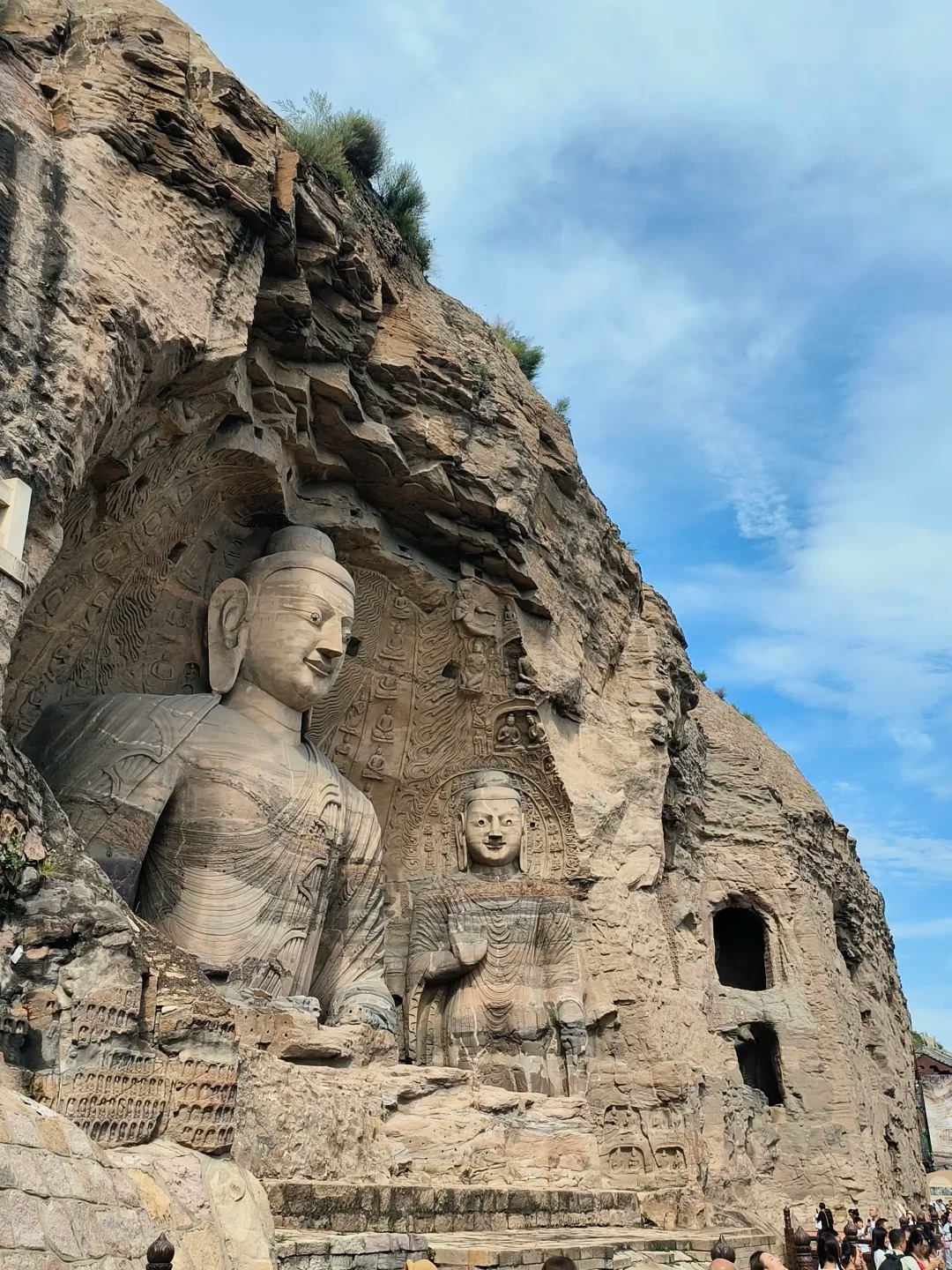
Yungang Grottoes, Datong, Shanxi
Carved into the cliffs west of Datong, the Yungang Grottoes are one of China’s great collections of Buddhist art. Work began in the fifth century, when Datong was the capital of the Northern Wei dynasty. Across roughly one kilometre of cliff face, large Buddhas stand alongside thousands of smaller figures and intricate carvings. UNESCO records 252 caves and niches and about 51,000 statues. The site became a World Heritage Site in 2001. Look closely and you can see how artistic ideas from South and Central Asia took on new forms in China. Time zone: UTC+8, with no daylight saving time.
Top highlights
- Cave 20’s open-air Buddha: This monumental seated figure is Yungang’s best-known image. Take a moment to view it from a distance before looking at the details of its face and robes.
- The Tanyao Caves: Caves 16–20 belong to the earliest major phase of carving. Their imposing figures show the scale of the Northern Wei court’s Buddhist projects.
- Stories carved in stone: Beyond the giant statues, look for smaller Buddhas, decorative patterns and figures that reveal the skill of the artists. A guide can help you notice details you might otherwise walk past.
- A changing artistic style: As you move along the cliff, compare the caves and see how Buddhist imagery developed during the fifth and early sixth centuries. Some caves may be temporarily closed for conservation.
Local culture
Yungang tells the story of Datong when it was a Northern Wei capital and a meeting place for different artistic traditions. The grottoes were created under imperial direction, and their sculptures bring together Buddhist ideas from South and Central Asia with Chinese craftsmanship. This history makes a visit more rewarding than a quick photo stop.
For a comfortable first visit, spend at least half a day at Yungang, then return to Datong’s old city for dinner. If you have another day, Datong’s temples and historic streets offer more ways to explore the region’s architecture and religious art.
Food
After visiting the grottoes, try Datong’s knife-shaved noodles (dao xiao mian), cut directly from a block of dough into boiling water. Other local choices include Hunyuan liangfen, a chilled starch jelly served with savory seasoning, and Datong-style hot pot. For a snack, look for yellow millet cake (huang gao). Ask about ingredients and spice levels when ordering.
Practical tips for visitors
- Reserve before you go. Yungang requires advance, real-name reservations. An April 2026 notice expanded the booking window to 15 days before the visit, excluding the same day. Check the current rules when planning your trip.
- Bring your passport. Use the same document details for your reservation and entry. Confirm the current booking method for foreign passport holders before traveling.
- Arrange a guide if you want the stories behind the carvings. Ask about English-language guiding in advance; availability and cost should be confirmed separately.
- Allow time for the journey. The grottoes are about 16 km (10 miles) west of central Datong. Plan your return transport before you set out, especially if you have a train to catch.
- Protect the site. Wear comfortable shoes, follow signs and staff instructions, and check photography rules at each cave. Outdoor sections can feel exposed in cold or windy weather.
At Yungang, the scale draws you in, but the small details stay with you. Contact us with your travel dates if you’d like help arranging a Datong visit, an English-speaking guide or a longer Shanxi itinerary.